The days are getting shorter, the leaves are beginning to go crimson, and the shelves of the local Target are a mix of Halloween candy and Christmas decorations. It must be October.
While I love this time of year, I actually feel kind of sorry for October. I don’t know who decides which months get picked to host which cause awarenesses, but it seems like whoever it was just gave up when they got to October and dumped all the rest of them here.
If you didn’t already know, October is Global Diversity Awareness Month. Italian-American Heritage Month. National Domestic Violence Awareness Month. AIDS Awareness Month. Breast Cancer Awareness Month. National Depression Education and Awareness Month. National Pregnancy and Infant Loss Awareness Month. Rhett Syndrome Awareness Month. National Spina Bifida Awareness Month. National Bullying Prevention Month.
Those are some pretty weighty issues to lump into one month.
But that’s not all. October is also American Cheese Month. National Caramel Month. National Chili Month. National Pickled Peppers Month. (The pickled pepper lobby must be mighty.) National Book Month. National Chiropractic Month.
And that’s STILL not all of causes that October has to host. Like Caffeine Addiction Recover Month. Emotional Wellness Month. Fair Trade Month. German-American Heritage Month. Healthy Lung Month. National Ergonomics Month. National Protect Your Hearing Month. And World Menopause Month.
Oh yeah, and National ADHD Awareness Month. (Got distracted and forgot about that one.) There’s a lot going on in October, and that doesn’t even count the World Series and Halloween!
All of this is to say, I don’t blame you if you didn’t know that October is ALSO Down Syndrome Awareness Month.
I lose track of it too, because our first awareness of Down syndrome happened in June, not October. That’s when we got our diagnosis for Rumi. (I’ve written about it before, and it’s worth a read if you don’t know the story.) But before that we knew absolutely nothing about Down syndrome. Actually, we knew less than that, because what we thought we knew was based on outdated information and just plain misinformation.
But we started learning pretty quickly once Rumi arrived, thanks to Club 21, and the other parents we met there. Once you get over the initial worry that comes with the diagnosis, and you meet people who are farther down the road that you are, you begin to calm down a little and realize that having a child with Down syndrome is not that much different from having a child without a diagnosis.
I’m delighted when people ohh & ahh over my daughter, and I’m proud to show her off any change I get. She is as cute as a button, and if anyone wanted to put her in print ads I wouldn’t stop them.
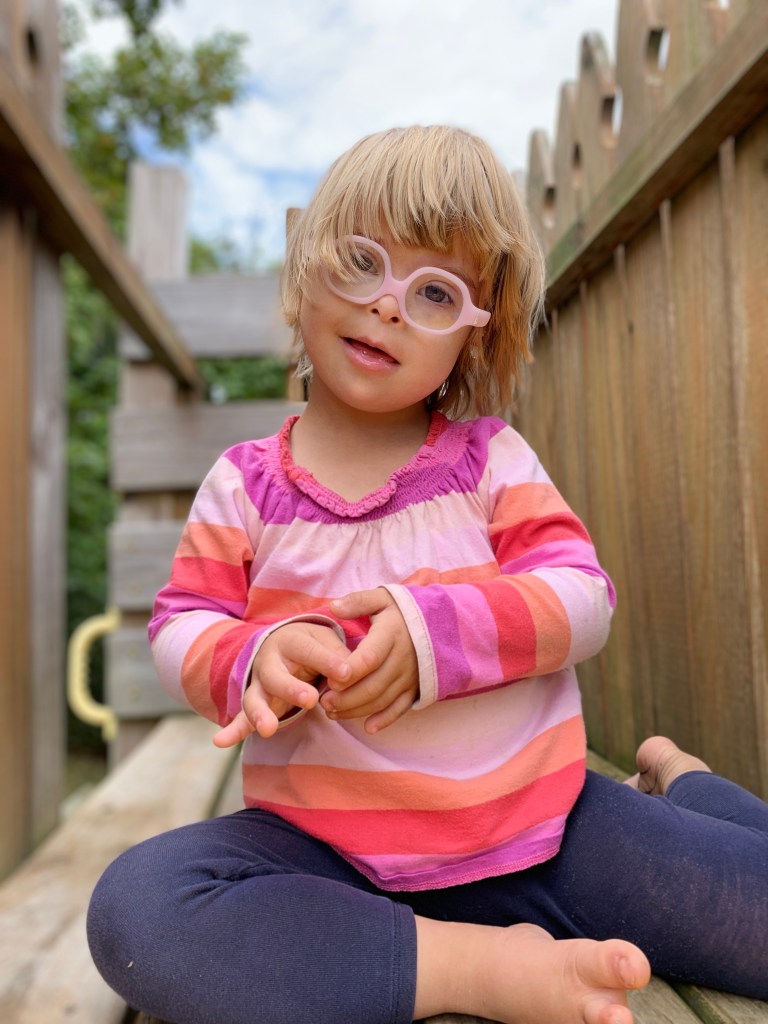
But I want you to understand that she is so much more than just another pretty face. Because one day she’s going to transition from being an adorable munchkin into an awkward teen and young adult, and if all you ever think of her is as a cuddly ragamuffin then her journey in this life is going to be stunted.
People with Ds are capable of leading perfectly normal, average everyday lives. But they need people who see them as equals and not as people to be felt sorry for and put into special programs. (I’m not knocking special programs either. If they work for you or someone you know that’s great.) They need advocates, friends, and mentors willing to be patient with them and help them learn. They need opportunities to learn and grow in typical settings, so when it’s time for them to head out into the world they have some idea how it works.
The days of being taught “life skills” are over. Kids with Ds want to learn how to use computers and make pottery and bake cookies and run their own businesses. Honestly, I could put up one hundred links to all the people with Ds doing neat, creative, typical jobs.
Because they are just like you and me.
So, as more and more studies come out showing the benefits of including children with Ds in “typical” classrooms, and the value employees with Ds add to an organization, I just wanted to make a little room in this crowded month for you to understand a little more about Down syndrome and see that it’s not something to pity or be afraid of. It’s just a little something extra that makes those individuals that much more human. And they should be treated as such.
Ok, Peter Piper, you can get back to your pickled peppers now.

 Hold On Let Go